
SAFE project
Supporting Age-Friendly Workplaces for Employees 55+
About the project
More and more people are working later in life. Due to their chronological age, older workers however often face ageism in the form of prejudice, discrimination, or neglect. The “Solutions for Age-Friendly Employer (SAFE)” project joins four partners from different sectors in the Central Baltic Region countries – Estonia, Finland, and Sweden. The cooperation aims to strengthen and improve employment opportunities for employees aged 55+ specifically focusing on the health and wellness sectors.
Developing competence and learning new things throughout the life course strengthens our workability and improves our overall well-being. In the current labour market more discussion and change are needed to build diverse work communities. In this project, we support the construction of age-friendly work communities without forgetting the different generations.
Announcements
October 2026
SAFE and Sound podcast series gains visibility
The SAFE and Sound podcast series, produced as part of the SAFE project, has gained visibility through the website and LinkedIn channel of the Northern Dimension Partnership in Public Health and Social Well-being (NDPHS). The series explores how experience can be valued, learning supported, and opportunities created for employees of all ages to grow and contribute.
Heini Maisala and Liisa Nuutinen from Metropolia University of Applied Sciences host four podcast conversations with experts from business, HR and work ability. Together, they explore practical ways to build age-friendly workplaces.
Four conversations on age-friendly working life:
- Antti Harjuoja, NextMile: Recognising strengths and supporting career development at every age.
- Jaana Jantola, Tempore Personnel Services: Valuing experience and making workplace flexibility work.
- Katja Hautala, Canon Finland: Building psychological safety, sharing knowledge and supporting career transitions.
- Kati Korhonen-Yrjänheikki, Elo: Bringing generations together and keeping learning opportunities open throughout working life.
The podcasts offer practical insights for managers, HR professionals and others interested in creating workplaces where people of all ages can contribute their expertise, continue learning and develop throughout their working lives. Listen to SAFE and Sound podcasts on Spotify.
SAFE Project at the Working Life Now and in the Future Seminar
The Working Life Now and in the Future seminar took place on 6 October 2026 at Metropolia University of Applied Sciences’ Myllypuro campus in Helsinki. The event was jointly organized by three projects, and it explored solutions for employment and recruitment, sustainable working careers, and the development of a diverse and equal working life. Expert presentations, a panel discussion and workshops highlighted the importance of continuous learning, collaboration and effective workplace practices.
Sustainable Working Careers Through Collaboration
The expert presentations highlighted continuous learning, individual employment pathways and making better use of experienced employees’ skills. Marko Hakovirta, President and CEO of Metropolia University of Applied Sciences, emphasised the importance of continuous learning and collaboration between different actors in working life. Katja Rajaniemi from Helsinki Employment Services highlighted individualised services, employer cooperation and recognising the skills of international professionals. Antti Harjuoja from Saranen Consulting addressed retirement planning, ensuring skills continuity, flexible working arrangements and challenging age-related stereotypes.
The Foxtrott Playback Theatre group brought creative expression and collaborative reflection into the discussion on diverse workplaces. Participants shared their thoughts, insights and feelings from the morning, which the group interpreted on stage. The interactive performance offered new perspectives on how diversity is experienced by people with different skills and backgrounds, creating an engaging opportunity for shared learning.
In a panel discussion moderated by Tiina Merikanto, Elina Pylkkänen (OAJ), Petri Männistö (Jollas Institute), Harri Jaskari (Federation of Finnish Enterprises), Kari-Pekka Martimo (Ilmarinen) and Hannu Rusama (City of Vantaa) explored how municipalities and companies can work together to build sustainable working careers. The discussion emphasised flexible working arrangements, skills development and creating new pathways into employment.
The discussion also highlighted the need for greater courage and a stronger culture of experimentation. People are often viewed as either employed or unemployed, even though working life needs more flexible options and gradual pathways into employment. Progress requires employers to be willing to experiment with new ways of organising work, as well as structures that support combining work, studies and skill development. Rather than expecting people to adapt to existing structures, we need to rethink those structures and dare to try new solutions.
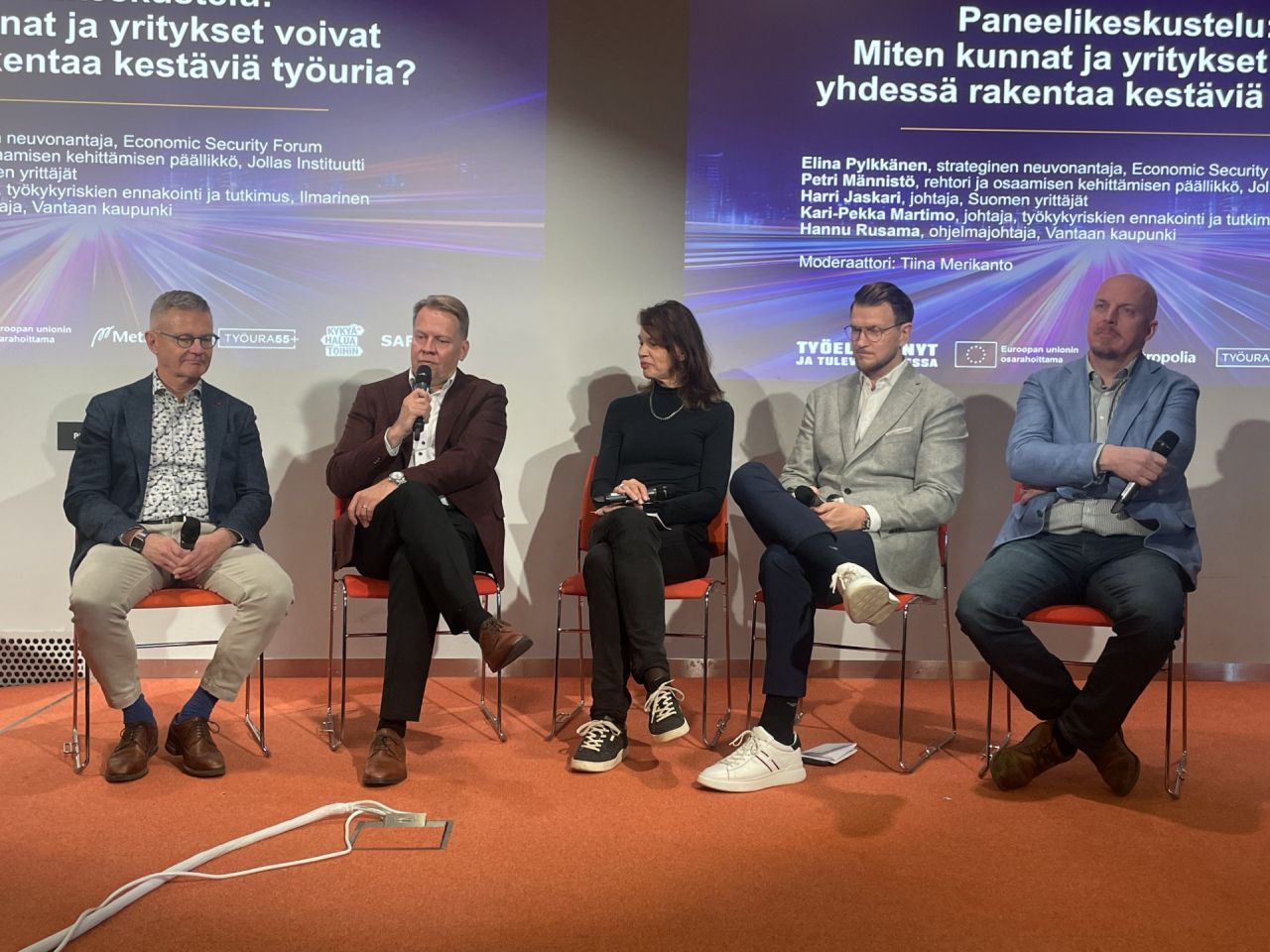
Picture 1. In the panel discussion on the future of working life, the speakers were Elina Pylkkänen (OAJ), Petri Männistö (Jollas Institute), Harri Jaskari (Federation of Finnish Enterprises), Kari-Pekka Martimo (Ilmarinen) and Hannu Rusama (City of Vantaa).
Age-Friendly Workplaces Now and in the Future
In the SAFE project’s bilingual workshop, conducted in Finnish and English, Liisa Nuutinen and Heini Maisala invited participants to imagine a workplace where they would want to work at the age of 67. Participants represented different age groups and international backgrounds, bringing a wide range of perspectives to the discussion. The exercise encouraged reflection on the workplace practices and conditions that enable meaningful work at different stages of life.
The discussions highlighted opportunities to influence one’s role and working hours, flexibility, a sense of community and the ability to use one’s strengths. Continuous learning, sharing expertise, good leadership and a safe working environment were also seen as important conditions for remaining in work.
The discussions reinforced the seven areas identified by the SAFE project as important for people’s ability and willingness to stay in work: work community, training and learning, flexibility, health and well-being, equality and fairness, retirement, and leadership practices.
Age-friendly workplaces are not about introducing measures for older employees. They are about creating working environments and practices that take different needs, skills and life situations into account. An age-friendly working life benefits employees of all ages and helps create the conditions for sustainable working careers.
SAFE Project Develops Age-Friendly Workplaces
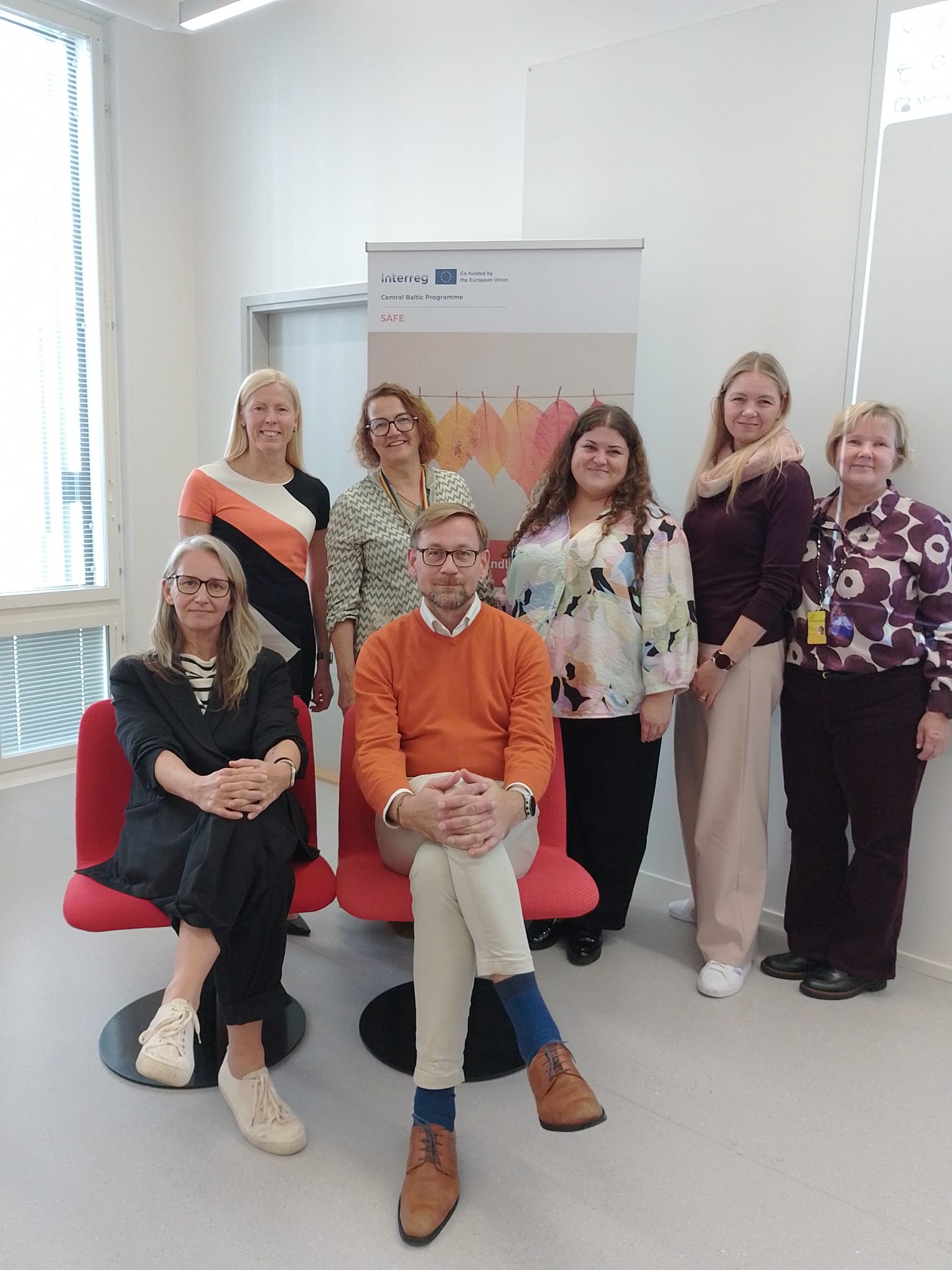
Picture 2. Pille Strauss, Krista Mulenok, Liisa Nuutinen, Peep Peterson, Marika Aedviir, Tiina Alasoo and Heini Maisala.
The second day’s partner meeting focused on preparations for the final project period. The agenda covered final testing of the SAFE tool, feedback collection, joint communication and dissemination and how the project’s results can remain useful after the project ends.
July 2026
SAFE Project at the International ICAP 2026 Congress in Florence
The SAFE project was represented at the 31st International Congress of Applied Psychology (ICAP 2026), held in Florence, Italy, from 21 to 25 July. The congress brought together applied psychology researchers and practitioners from around the world.
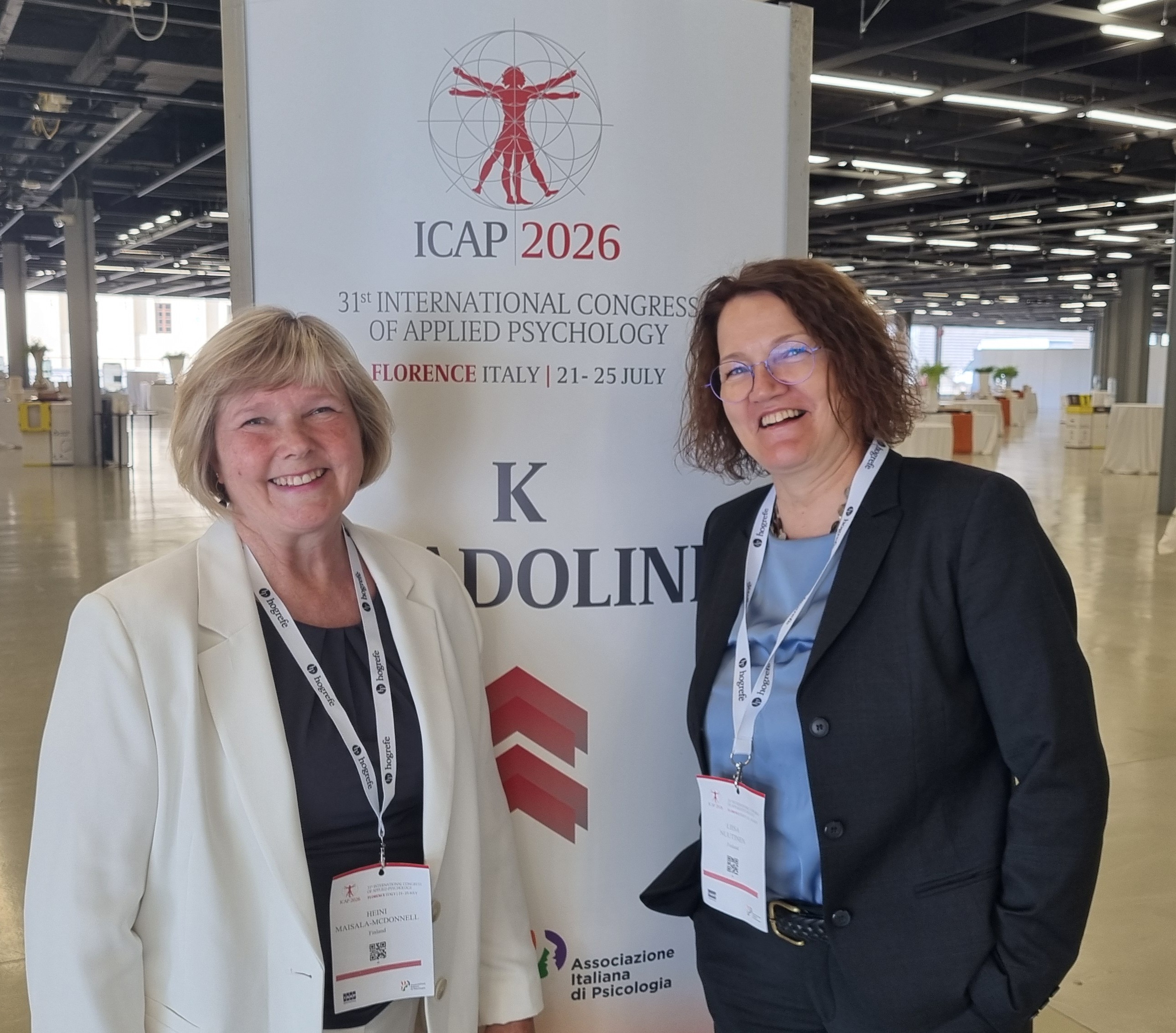
Organised by the International Association of Applied Psychology (IAAP), the International Congress of Applied Psychology (ICAP) takes place every four years. The 2026 congress was the 31st in the series. The congress is organised into 18 divisions, covering a broad range of areas in applied psychology, including work and organisational psychology, leadership, education, health, ageing, environmental psychology and societal development.
ICAP has a history spanning more than a century. The first International Congress of Applied Psychology was held in Geneva, Switzerland, in 1920. From its early years, the congress brought psychologists together to exchange ideas on the practical application of psychology, including working life and vocational guidance.
People at Different Stages of Life in a Changing Society
At ICAP 2026, an invited symposium entitled “Social Changes – Psychological and Transdisciplinary Approaches to Dealing with Demographic Issues” was held within Division 3: Psychology and Societal Development. The symposium explored societal and demographic change, focusing on psychological processes and interdisciplinary approaches to addressing the challenges these changes bring.
The presentations examined people's well-being at different stages of life and in a range of circumstances. Topics included support for young children and their parents, approaches to supporting the well-being of people with intellectual disabilities, and young people's social lives in a digital society.
Working-life perspectives included population ageing, age-friendly workplace solutions, and flexible retirement as a way to support older employees and benefit employers.
Age-Friendly Working Life as Part of Demographic Change
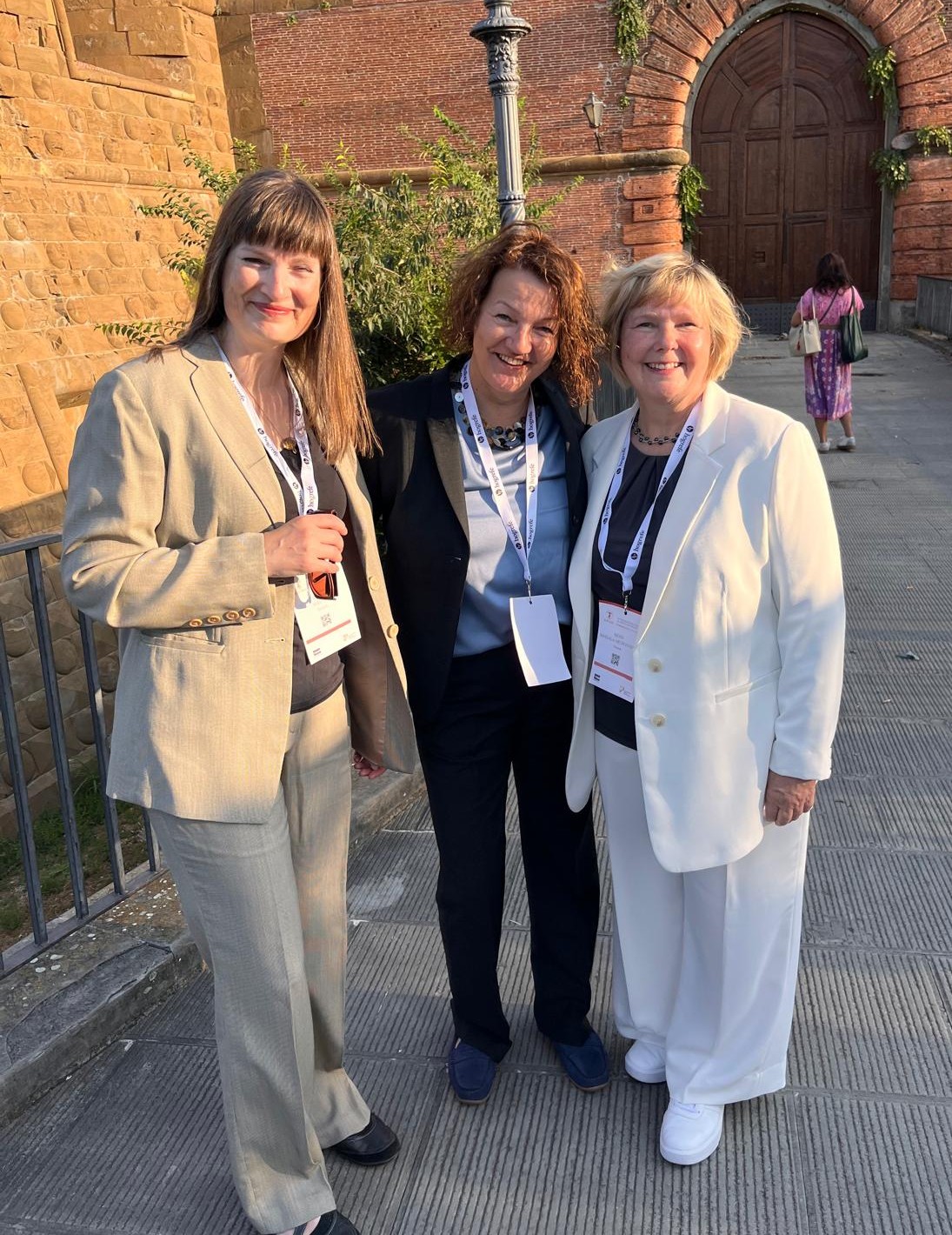
As part of the SAFE project, Liisa Nuutinen, Heini Maisala and Marjo Wallin presented “Sustainable Success Across Ages: Solutions for Age-Friendly Employers” at the symposium. Their presentation explored how employers can respond to population ageing and create sustainable working lives for employees of different ages.
The presentation connected with the symposium’s broader theme of how societal changes affect people’s lives and how working life can evolve to meet changing needs. Age-friendly working life is not only about supporting older employees, but also about creating workplace structures, practices and leadership approaches that enable people of all ages to thrive, maintain their well-being and use their skills throughout their working lives.
The symposium was chaired by Daniela Eberhardt, who also presented “Flexible Retirement – Self-Determined Development for Older Employees and Practical Benefits for Employers.” Her presentation examined flexible retirement, self-determined development among older employees, and the practical benefits these approaches can offer employers. Together, the presentations explored the issues surrounding an ageing workforce from both employee and employer perspectives.
An International Perspective on Metropolia’s Work
ICAP provided the SAFE project with an opportunity to explore its themes in the context of broader societal change. The congress also increased the international visibility of Metropolia’s expertise in applied psychology and working-life development.
The next ICAP congress will be held in Zurich in 2030.
The two-day SAFE seminar promoted cooperation and development work


The two-day seminar in Finland on 14-15th of October at Hotel Rantapuisto brought participants together to discuss the progress of the project, share experiences, and plan future measures. The event strengthened cooperation and provided valuable insights for the development of the project.
During the seminar, constructive discussions were held and intensive work was done on the key themes of the project. A particular focus was placed on the development of a self-assessment tool. The tool was conceived and modified together with the participants, and its first version was presented during the seminar. A lot of useful feedback and new ideas for further developing the tool were received in order to strengthen its usability.
At the end of the seminar, it was clear that the fourth work package of the project had gotten off to a fast and goal-oriented start. Shared commitment and active participation created a strong foundation for the next stages of the project.
Also, thank you Rantapuisto for excellent service!
Timeline 2024 - spring 2025

Podcast

We are pleased to announce that a new podcast series is being launched as part of the SAFE project. The podcast will discuss the project's themes, results, and current topics with experts and project participants.
The aim is to highlight the project's perspectives more broadly and provide listeners with interesting information and practical examples of the project's work. You can find the podcast here: https://open.spotify.com/show/0phMZ2SDuhfSEoD5iKFvZ9
Silver Economy by Nextmile
We attended a Finnish-language webinar titled Silver Economy, organized by Nextmile. During the session, we had the opportunity to present our project alongside other Finnish initiatives focused on promoting longer and more sustainable working careers. Here you can find the webinar: https://nextmile.fi/webinaari-2025-04-eu/
What makes a workplace age friendly, and why does it matter?
As work is a significant element of our lives where we spend a large part of our waking hours, it plays a vital role in our overall health and well‐being. We also change and age during our working lives. The nature of our occupation not only influences our aging process, but our evolving age also impacts the types of jobs we can pursue and how we perform. Our Interreg Central Baltic project SAFE seeks to improve employment opportunities for individuals aged 55 and above and will propose solutions for age friendly practices at work. The first step in this process is to define what creates an age-friendly workplace and to evaluate current practices. During a project partner meeting hosted by the NDPHS Secretariat in Stockholm, we finalized the key steps in developing a self-assessment tool that will help companies to determine their age friendliness culture or a lack of it. The online tool will be piloted later this year.
Read more from here: https://centralbaltic.eu/project-news/what-makes-a-workplace-age-friendly-and-why-does-it-matter/
“Solutions for Age-Friendly Employer” (SAFE) project enters the phase of co-creation with employees and employers
On September 25th, partners from the SAFE project gathered in person at the NDPHS Secretariat office in Stockholm. The project is advancing steadily, and we have started developing solutions for age-friendly workplaces. While we've held numerous online meetings with our partners, this in-person meeting allowed us to align on workshop implementation and collect valuable input for designing the self-assessment tool.
The SAFE project aims to create a toolkit to help organizations understand the importance of age-inclusive HR policies and reduce age discrimination in the workplace. By involving companies early in the development process, we ensure our solutions are practical and tailored to the real needs of both employees and employers. This collaborative approach supports the creation of more inclusive work environments for people at various career stages, ultimately fostering healthier organizations and higher employee satisfaction.
At the meeting, the team from Metropolia University shared insights from their discussions with partner organizations. The group agreed on the importance of conducting workshops in a consistent way to allow for systematic comparison of results. The participating organizations include Nurmilintu, Ylähovi, the Veteraanitalo Foundation, and HoivaNova. Tallinn University Haapsalu College has also partnered with Synlab (Estonia) and the Haapsalu Neurological Rehabilitation Centre, where workshops will take place in October and November.
Each partner has begun analyzing the current state of age-friendly practices in their country. These workshops and evaluations will provide essential insights for the development of the organizational self-assessment tool. The main objective for the project’s next phase is to create and pilot this tool.
We had our kick-off on April 15th in Tallinn! Here you can read more about it: https://centralbaltic.eu/project-news/ndphs-news/
Execution time
01.04.2024- 31.03.2027
Contacts
Project Manager Liisa Nuutinen liisa.nuutinen [at] metropolia.fi (liisa[dot]nuutinen[at]metropolia[dot]fi)
Project Employee Heini Maisala-McDonnell heini.maisala-mcdonnell [at] metropolia.fi (heini[dot]maisala-mcdonnell[at]metropolia[dot]fi)
- Interreg Central Baltic


