Studies
What is it like to study Nursing?
See our students Anna's and Michael's experiences of studying Nursing in Metropolia.
Do you want to study Nursing and Finnish language in bilingual degree programme?
You can study Nursing in English, learning also Finnish language at the same time. In bilingual Nursing education there is no Finnish requirement. The studies are aimed at immigrants starting their Finnish studies from the basics, but they are also suitable for Finnish speakers who wish to study in English and in an international and multicultural degree programme.
The programme is organized by TOKASA project, which is funded by the Ministry of Education and Culture.
As a Registered Nurse you will work in a people-oriented profession
As a Registered Nurse
- you are an expert in nursing
- you work in multidisciplinary teams with different professionals
- you are responsible for the holistic care, disease prevention and health promotion of people of all ages
Bachelor of Health Care, Nursing Degree gives you a qualification as a Registered Nurse in line with EU directives.
Could I be a Nurse?
A nursing profession may be for you if:
- You are interested in working with people and want to promote their health and well-being.
- You are cooperative and motivated to work in a multidisciplinary team.
- You are inspired to learn new things and able to adapt quickly to changing situations.
- You are willing to work in shifts.
As a nurse, you are expected to have the following skills, which are learned during your studies:
- The ability to organise your own work and take responsibility.
- The ability to anticipate and make independent decisions.
- Strong communication skills.
- Strong clinical skills.
- The ability to work with others as a part of multiprofessional team.
To study nursing, you should be in good health and functional capacity.
Diverse working opportunities in Nursing
A bilingual nursing degree provides you excellent and varied opportunities to work as a Registered Nurse both in Finland and internationally.
You can work with people of different ages
- in specialised healthcare, for example in hospital wards, emergency units, an operating theatre or intensive care unit.
- in primary health care, for example in home care and hospital wards.
- in the private sector in health and welfare services.
- in the third sector, in associations and organisations.
- in health technology.
- as an expert and in consultancy roles.
- as an entrepreneur.
After graduation, you will be able to work in Finnish language in Finnish healthcare with excellent employment and career opportunities. Studying in bilingual degree programme will enhance your language skills both in Finnish and in English and ability to work also in international environment.
How will you study?
The studies are mostly provided as contact teaching on campus, as simulation learning, and by training practical skills both independently and with other students. Part of the studies will be carried out as independent online studies.
You will begin the studies in English without the Finnish language proficiency requirement. The role of Finnish as a language of instruction strengthens as the studies proceed. During the studies, you can either start learning Finnish from the basics or continue the studies from your own starting level. Finnish language is integrated in the courses from the beginning of the studies. If your first language is not Finnish, the elective studies in your curriculum will be Finnish language studies. If your first language is Finnish, you can select also other elective studies. As a student you must be motivated and committed to study Finnish to reach the required proficiency.
At Metropolia, you have an opportunity to complete part of your studies in our Future Proof Health and Wellbeing innovation hub. Read more about the Research and Development Programs and Collaboration Platforms in innovation hub.
Studying Nursing in modern learning environments
At the Myllypuro campus, you will study in internationally unique learning environments. In the simulation hospital, you can practise a wide range of nursing skills independently in skills workshops and under the guidance of a teacher. The simulation hospital's facilities are similar to a real hospital environment and include teaching facilities for paediatric nursing and medical care, emergency, intensive care and surgical wards, as well as an ambulance.
Internationalization
You will study in a multicultural group of students and teachers, with English and Finnish as teaching languages. You will have the chance to participate in international activities like projects and joint teaching by international partners. International student exchange is also a possibility.
Further education opportunities
The Bachelor of Health Care degree gives you eligibility for Master's programmes in Finland and abroad. Once you have completed your Master's degree, you can apply for postgraduate studies for a doctorate. There are also options for continuing education.
After graduating, you can apply to study
- Master´s Degree in Universities of Applied Sciences, where an additional 2 years work experience is required.
- At Metropolia, you can study for example the following degrees:
- Master´s Degree in University, for example Master´s in Nursing Science
The programme is conducted bilingually with English and Finnish. Applicants must have the minimum of B2 level in the English language. There is no Finnish language requirement when applying, and by the time of graduation the aim is that you have reached the required Finnish language level to be able to work in Finland as a Registered Nurse. At the end of the studies, you will demonstrate having reached the language skills required in profession.
The degree in Nursing is a Bachelor level degree. The programme meets the standards of the European Union Directive (2013/55/EU) on the recognition of professional qualifications, as well as the national criteria and European Qualifications Framework (EQF level 6) set for degree programmes.
Only certified professionals who have completed the appropriate degree may work as a registered nurse. After completing the degree, you will apply for the right to practice nursing profession from Valvira, the National Supervisory Authority for Welfare and Health, according to the Act on Health Care Professionals (559/1994). Health care professionals are required to have the sufficient oral and written Finnish/Swedish language proficiency.
Students' and Alumni's experiences
Ben Gran
Nursing student Ben Gran tells about his experiences and studies in Metropolia.
Carolyne
Carolyne graduated from Degree Programme in Nursing and continued her studies in Health Business Management Master's Programme.
Ask Head of Degree Programme more about studies

Anna
Sievers
Senior Lecturer
+358505933746
Anna.Sievers [at] metropolia.fi
Subscribe to the Applicant’s Newsletter
You will receive information 1–3 times a year about Metropolia's degree programmes, application schedules, and studying with us.
Applying
- Application period-Start of studiesautumn 2025
- Day-time studies
Instructions for applying
In the spring 2025 Joint Application to higher education, you can apply to degree programmes that start in the autumn of 2025. The application period starts on the 8 January 2025 at 8 am and ends on the 22 January 2025 at 3 pm (local time in Finland).
All the information needed to apply can be found on the national Studyinfo.fi portal. At Studyinfo.fi you can find descriptions of degree programmes, application criteria, application instructions, application forms and much more.
Application fee
From January 2025 onwards there is going to be an application fee of 100 euros. The application fee is collected for applicants from countries outside EU/EEA seeking education leading to a degree in higher education. The Finnish National Agency of Education will collect the application fee in connection with filling in the Studyinfo application form. The application fees are introduced for applications starting 1 January 2025 and onwards, when applying for degree programmes beginning on or after 1 August 2025. There is no application fee for Finnish or EU citizens.
More about application fee in Studyinfo.fi.
Questions about application fees? Contact applicationfee [at] oph.fi (applicationfee[at]oph[dot]fi)The application fee does not guarantee that you will be offered admission to studies.
The International UAS Exam is a joint digital entrance exam of the Finnish Universities of Applied Sciences (UAS), used for selecting students to study programmes leading to a bachelor’s degree and conducted in English. The entrance exam is completed by the applicant’s own computer remotely online.
Read more about the International UAS Exam and language requirements on the website uasinfo.fi
- Application period-Start of studiesautumn 2025Apply now!
- Day-time studies
The Application on the Basis of Metropolia’s Open UAS Studies is aimed at those who have completed open UAS studies at Metropolia University of Applied Sciences. Studies are considered to be Metropolia's if they are entered in the Metropolia's study register, and open studies if they have not been completed with the right to study for the degree-leading education.
Application period: 1 May 2025 8:00 am - 31 October 2025, all times refer to local time in Finland.
In flexible admission (i.e. rolling admission) the study places are filled in the order in which applications are received, so that all applicants who meet all the student selection requirements are accepted on a first-come, first-served basis until the application ends or the study places are filled.All the information needed to apply can be found on the national Studyinfo.fi portal. At Studyinfo.fi you can find descriptions of degree programmes, application criteria, application instructions, application forms and much more.
Note: Many degree programmes accept applications on a continuous basis. However, applicants who are required to pay tuition fees should carefully consider the timing of their application. In most cases, it is not advisable to begin studies in the middle of a term (either autumn or spring), as tuition fees cannot be paid for only part of the term. For this reason, it is generally best to apply well in advance of the start of the term, so that studies can commence from the very beginning.
Application fee
From January 2025 onwards there is an application fee of 100 euros. The application fee is collected for applicants from countries outside EU/EEA seeking education leading to a degree in higher education. The Finnish National Agency of Education will collect the application fee in connection with filling in the Studyinfo application form. The application fees are introduced for applications starting 1 January 2025 and onwards, when applying for degree programmes beginning on or after 1 August 2025. There is no application fee for Finnish or EU citizens.
More about application fee in Studyinfo.fi.
Questions about application fees? Contact applicationfee [at] oph.fi (applicationfee[at]oph[dot]fi)The application fee does not guarantee that you will be offered admission to studies. The application fee is not refunded if you cancel your application or are not offered admission.
- Application period-Start of studiesautumn 2025Apply now!
- Day-time studies
The Application on the Basis of Finnish Higher Education Studies is aimed at those who have completed higher education studies in Finland. Studies are taken into account regardless of whether they have been completed as open studies or in education leading to a degree, or whether the right to study is valid or has expired.
Application period: 1 May 2025 8:00 am - 31 October 2025, all times refer to local time in Finland.
In flexible admission (i.e. rolling admission) the study places are filled in the order in which applications are received, so that all applicants who meet all the student selection requirements are accepted on a first-come, first-served basis until the application ends or the study places are filled.
All the information needed to apply can be found on the national Studyinfo.fi portal. At Studyinfo.fi you can find descriptions of degree programmes, application criteria, application instructions, application forms and much more.
Note: Many degree programmes accept applications on a continuous basis. However, applicants who are required to pay tuition fees should carefully consider the timing of their application. In most cases, it is not advisable to begin studies in the middle of a term (either autumn or spring), as tuition fees cannot be paid for only part of the term. For this reason, it is generally best to apply well in advance of the start of the term, so that studies can commence from the very beginning.
Application fee
From January 2025 onwards there is an application fee of 100 euros. The application fee is collected for applicants from countries outside EU/EEA seeking education leading to a degree in higher education. The Finnish National Agency of Education will collect the application fee in connection with filling in the Studyinfo application form. The application fees are introduced for applications starting 1 January 2025 and onwards, when applying for degree programmes beginning on or after 1 August 2025. There is no application fee for Finnish or EU citizens.
More about application fee in Studyinfo.fi.
Questions about application fees? Contact applicationfee [at] oph.fi (applicationfee[at]oph[dot]fi)The application fee does not guarantee that you will be offered admission to studies. The application fee is not refunded if you cancel your application or are not offered admission.
- Application period-Start of studiesspring 2026
- Day-time studies
Instructions for applying
In the autumn 2025 Joint Application to higher education, you can apply to degree programmes that start in the spring of 2026. The application period starts on the 1 September 2025 at 8 am and ends on the 11 September 2025 at 3 pm (local time in Finland).
All the information needed to apply can be found on the national Studyinfo.fi portal. At Studyinfo.fi you can find descriptions of degree programmes, application criteria, application instructions, application forms and much more.
Application fee
Applicants who are not citizens of the EU, EEA or Switzerland are required to pay an application fee in order to apply to higher education studies. The application fee of 100 euros is collected for applicants from countries outside EU/EEA seeking education leading to a degree in higher education. The Finnish National Agency of Education will collect the application fee in connection with filling in the Studyinfo application form. The application fees are introduced for applications starting 1 January 2025 and onwards, when applying for degree programmes beginning on or after 1 August 2025. There is no application fee for Finnish or EU citizens.
The application fee does not guarantee that you will be offered admission to studies. The application fee is not refunded if you cancel your application or are not offered admission.
More about application fee in Studyinfo.fi.
Questions about application fees? Contact applicationfee [at] oph.fi (applicationfee[at]oph[dot]fi)The International UAS Exam is a joint digital entrance exam of the Finnish Universities of Applied Sciences (UAS), used for selecting students to study programmes leading to a bachelor’s degree and conducted in English. The entrance exam is completed by the applicant’s own computer remotely online.
Read more about the International UAS Exam and language requirements on the website uasinfo.fi
Useful links
More information
For more information on the application process please contact
Metropolia's Student and Admission Services:
+358 40 712 5100
admissions [at] metropolia.fi (admissions[at]metropolia[dot]fi)
You may also be interested

Studies
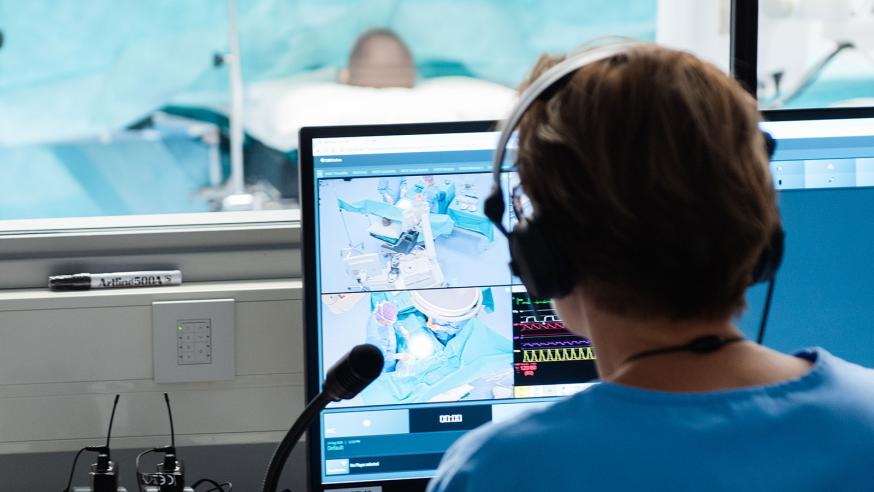
Nursing Bachelor's path studies
Nursing path studies are alternative route to becoming a degree student after good grades and separate application process.
Studies
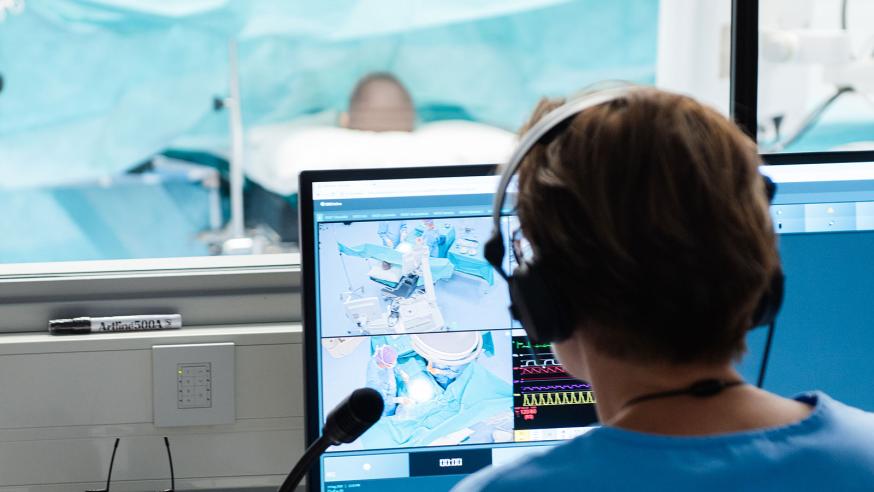
Nursing Top-Up Degree
Nursing top-up degree is aimed for those who have prior education in the field of Nursing. Studies take 1,5 - 2 years.
Studies
Development and Leadership of Nursing, Master's Degree
Development and Leadership of Nursing is a Master’s programme for nursing professionals like nurses, midwifes, public health visitors and paramedics.
Starting studies
How to start your studies in Metropolia
Welcome to study for a degree at Metropolia!
Congratulations! You have been admitted to Metropolia University of Applied Sciences and we are delighted to have you as a new member of our vibrant community of more than 16 000 students!
You have made an excellent choice - Metropolia offers you unique multidisciplinary opportunities throughout your studies with its strong connections to working life and active role in innovations built around socially significant phenomena.
We are happy to have you with us and help you with any questions you might have. Welcome to Metropolia!
The below information applies to students who have been accepted to study for a full degree at Metropolia. Make sure to complete all the steps in order to secure your study place.
Confirming a place of study requires certain formalities to be completed by the deadline. More detailed instructions below:
Non-EU/EEA students need a student residence permit. You can begin the student residence permit application online at Enterfinland.fi. Remember that you must personally visit a Finnish embassy or consulate as part of this process. Start your residence permit process as soon as possible, carefully following the immigration authorities' instructions and regulations, so that you can receive your permit in good time before your studies begin! You can find detailed information and advice on the residence permit requirements and procedures on the Finnish Immigration Service (Migri) website.
Note that participating online programmes does not entitle you receiving residence permit. See more about the topic in Finnish Immigration Service websites.
All Metropolia's students who do not have a Finnish personal identity code, have to apply for it before their arrival or register at the local registry office after their arrival to Finland to apply for one.
Students who have to apply for residence permit (i.e. non-EU/non-EEA citizens) before their arrival to Finland should ask to be registered in the Finnish Population Information System when they apply for their first residence permit. This way they will receive a Finnish personal identity code at the same time as they are issued with the permit. More information on this for residence permit applicants
Other students have to apply for the personal identity code from the local registry office of the city where you are living in.
More information on Digital and Population Data Services Agency (DVV).
More information on registration to the Finnish Population Information System
After you have received the personal identification code, remember to inform it to the Student and Admission Services with the official document. Acceptable documents are for example DVV:s document (Notification of registration), Finnish passport, Finnish identity card with a photo, issued by police, Finnish driver's license, residence permit or KELA card with a photo.
When you start as a new student you need to activate your user account. Activation is possible when the right to study begins. For joint application, activation is possible from 1 August.
The purpose of the activation is that you personally accept the rules of the account usage policy and start using your account. Activate your user account primarily using Mobile Certificate and Netbank User ID. Please read first the instructions in IT Services wiki.
If you do not have a Mobile Certificate or Finnish Netbank User ID, you can use the Candour ID application to authenticate yourself. After authentication, you will receive instructions on how to activate your user account. Please read first the instructions in IT Services wiki (instructions will be updated in July 2025).
All foreign students (who are not EU citizens or citizens of Norway, Iceland, Liechtenstein or Switzerland) who come to Finland for the purposes of studying are required to have a health insurance, if the studies endure longer than three months.
More information on insurances
Student financial aid is for Finnish citizens. Foreign citizens are entitled to student financial aid if they live in Finland on a permanent basis for the purpose other than studying and they have registered as permanent residents in the Finnish population register system.
- Find out where your campus is located
- If you have a smart phone you can download the free HSL mobile app to get access to the public transportation Journey Planner and tickets (e.g. for travelling from the Helsinki-Vantaa airport to your apartment or from your apartment to the campus).
- If you have a smart phone you can download the Tuudo mobile app for free to get your digital student ID and student discounts (ID and discounts are available from the first day of the studies onwards)
- Information on student life and well-being, costs and finance, study environment etc.
New students need a laptop for their studies.
Minimum laptop requirements for new students:
- Windows 11 or Mac computer
- Intel i5/i7 processor (at least 8 gen), AMD Ryzen 5/7 or equivalent processor
- RAM 8 GB memory
- SSD hard disk min. 256 GB
The life cycle of the laptop should be at least 4 years. The estimated cost of a laptop meeting the recommended specifications is between €600 and €800 and upwards. If the student's studies are geared towards gaming or graphic design, for example, the laptop should have a more powerful graphics card and more SSD hard disk space.
The recommended operating system will depend on the degree programme and the area of specialisation. As a general rule, Microsoft Windows and Mac OS X are safe choices for a laptop operating system. Students of XR Design, 3D Animation and Visualisation and Visual Communication Design will be informed in the first weeks of their studies about the purchase of their own computer and the features they need.
Tuudo is a mobile app with which you can use various Metropolia web services easily on your smart phone. With Tuudo you can get VR, HSL, Matkahuolto and Kela student discounts immediately. The benefits are free for all Metropolia students.
In Tuudo you can check Metropolia, Admission Services, and student union METKA announcements, your schedule, study attainments, and cafeteria menus.
Get Tuudo on your phone from the app store for free and start using it!
During your studies, your support of well-being and health is Finnish Student Health Services (FSHS). The specialist in student health care offers you general, mental and oral health services and supports the well-being of study communities.
Our services can be used by students completing a bachelor’s or master’s degree at a university or a university of applied sciences who have registered as attending for the semester.
Master the facts! Familiarize yourself with our services and user instructions on the address fshs.fi, and the Health information resource on the address yths.fi/en/health-information-resource. You can also find information about appointments as well as current information about your service unit on the address yths.fi/en/service-units.
Start using Self! Self is the student’s own online service for health care issues at FSHS. In Self, you can manage appointment bookings, communicate via SelfChat and start a remote consultation. Log in to Self as a user immediately from the beginning of the semester and keep your contact details up to date for as long as you are a student. Read more: yths.fi/en/self-info.
The health care fee for students in higher education will be paid to Kela on your initiative (kela.fi/web/en/healthcare-fee-for-students-in-higher-education).
If you have social security coverage in another EU/EEA country or in Switzerland or the United Kingdom, you do not have to pay the healthcare fee. However, you can to use the FSHS’s services.
Metropolia does not have housing services to offer. Thus, it is the student's responsibility to find an accommodation for the period of their studies. There is a lot of competition in affordable housing, so it is important to start searching for a room many months prior to arrival. More information on accommodation
Already excited about starting your studies in Metropolia and meeting new people? On this page you will find welcome letters for each degree program.
Welcome letters are information packages prepared by your future tutors. They include, for example, important dates as well as information about studying, student benefits, or student life.
Create your own profile and sign up to JobTeaser portal now and stay up to date on job vacancies, training and upcoming recruitment events promoted especially to Metropolia students. There are hundreds of job opportunities available and a lot of information to support your career planning.
JobTeaser is a career portal where you can find lot of career information in one platform.
- Open jobs and traineeships
- Working life events
- Advice & guidance
- Employer profiles
Sign up and start exploring
Sign up to JobTeaser using your @metropolia.fi email address: https://metropolia.jobteaser.com/
You can also download a Jobteaser application.
Start of studies in the Nursing degree programme in August 2025
Starting instructions for new students starting in August 2025:
- 1. Before the start of studies
- 2. Students admitted in Joint application and Separate Application for International Degree Programmes, Edunation Pathway selection
- 3. Students accepted through open UAS studies, Finnish university studies or transfer application and students with previous studies in Nursing
- 4. General advice on starting your studies
1. Before the start of studies
- Answer the Survey for New Students by 6 August 2025. If you are registered as an absent student for autumn 2025, answer the questionnaire only when you start your studies as a present student.
- Familiarise yourself with the curriculum of your degree.
- Attend a virtual Zoom meet-up on 9 June 2025 at 9-10.30 (Finnish time) together with your career coaches Anna Sievers, Jenni Sinisalo and Alexis Mbeutcha and Finnish language teachers Hanna Lenkola, Suvi Korhonen and Anna-Maija Autere, guidance counselor Riikka Sorri and Welcome Hub coordinator Lilli Rasilainen. In the meeting you will get further instructions on starting your studies in Finland. Join the meet-up here. Material here.
- Attend an individual Zoom meeting on 7 or 8 August with Finnish language teacher to plan your upcoming Finnish studies. Book your time here.
-Attend a virtual Zoom meet-up on 11 August 2025 at 10-11.30 (Finnish time) together with your career coaches Anna Sievers, Jenni Sinisalo and Alexis Mbeutcha and Finnish language teacher Hanna Lenkola, guidance counselor Riikka Sorri and Welcome Hub coordinator Lilli Rasilainen. In the meeting you will get further instructions on starting your studies in Finland. Join the meet-up here.
2. Students admitted in Joint application and Separate Application for International Degree Programmes, Edunation Pathway selection
Start of studies:
All orientation events will take place on Myllypuro Campus, Myllypurontie 1, 00920, Helsinki or online (if not stated otherwise).
Tuesday 12 August 2025 at 9.00 - 16.00 at Myllypuro Campus MPD1002: Finnish language level test
This concerns students, who already live in Finland and have studied Finnish before. The test is just to map out the overall Finnish language skills in the group and support your individual study planning. Please, reserve a full day for the language tests.
Wednesday 13 and Thursday 14 August 2025: Individual online meet-ups with career coach and Finnish language teacher
The purpose of these meetings is to build everyone their individual study plan for both Nursing studies and Finnish language. Please, book your meeting times in here.
25 August 2025 at 9.00: Official start of studies
We will officially start the studies together simultaneously at Myllypuro Campus and Online (if you have not arrived yet in Finland)! Be prepared to have a full schedule throughout the semester.
The first days are orientation days, and it is very important to attend these classes. The beginning of the first semester will be held hybrid (= simultaneously in-person at Myllypuro Campus and Online). Online-participation is only offered for students who have not arrived in Finland yet. In-person participation for all is required at Myllypuro Campus from week 43 onwards.
Please make sure that you are able to attend the start of your studies. There will be no separate tutorials on the topics covered at the start of your studies, so it is very important that you attend from day one. Own laptop is needed in studies, please bring your laptop already on the first day.
If you have previous nursing studies, your studies will start as early as week 33 (11 August 2025).
Autumn 2025 timetable, daytime attendance
The autumn semester timetable will be available 20 June 2025 at https://lukkarit.metropolia.fi.
The schedules for the nursing course can be found by group ID SXN25S1T.
Please note that there might be some changes in the schedule before your studies begin.
Student tutors will help you to start your studies. They will create a WhatsApp group, and the link will be distributed later by email.
3. Students accepted through open UAS studies, Finnish university studies or transfer application and students with previous studies in Nursing
Please attend the following guidance meetings at Myllypuro Campus:
- Wednesday, 6 August 2025, from 9.00 to 11.30, Myllypuro campus, MPA1014. Contact person Riikka Sorri (riikka.sorri [at] metropolia.fi (riikka[dot]sorri[at]metropolia[dot]fi))
- Individual meetings / book your own time here for Thursday 7 August 2025 from 9.00 to 16.00 or Friday 8 August 2025 at MPA1016 from 9.00 to 16.00. Contact person Anna Sievers (anna.sievers [at] metropolia.fi (anna[dot]sievers[at]metropolia[dot]fi))
- RPL workshop Monday 11 August 2025 at 13.00-15.00 MPA6010. Bring your own laptop. Contact person Anna Sievers (anna.sievers [at] metropolia.fi (anna[dot]sievers[at]metropolia[dot]fi))
- For those with other higher education studies, there is separate information on how to use previous studies as part of your study pathway at the beginning of your studies.
If you have previously completed nursing degree studies, please familiarize yourself with the curriculum beforehand and compare your studies with the Metropolia curriculum. Bring your laptop and a transcript of your previous studies to the guidance meeting. Ask for a transcript of records from your previous higher education institution, which also shows your course credits. This will make it easier to compare your studies with the Metropolia´s curriculum and continuing your studies smoother.
The studies start in week 33, so it is essential that you attend the guidance meetings. Otherwise, the start of your studies may be delayed.
4. General advice on starting your studies
Activating your Metropolia user account and Microsoft Pro Plus 365 software package
Please see the general instructions for starting your studies at the top of this page. Follow the instructions to activate your Metropolia user account before starting your studies. Activation of the user account is possible from 1 August 2025. If you have been accepted to study earlier and have been absent you can activate your account before 1 August 2025.
Get to know Metropolia's e-services and download and install the Microsoft Pro Plus 362 software package free of charge before the start of your studies. You can download and install the software package after activating your user ID. Instructions: Student Survival Guide - e-services at Metropolia
Public transportation student discounts (HSL, VR, Matkahuolto) and Meal subsidy
- You will be able to use the benefits when your student status starts on 1 August 2025.
- You can access the benefits with the free Tuudo app downloadable on your phone with a digital student card
Study certificate
- You can request a certificate from Metropolia's Student and Applicant Services once your study rights have started, i.e. from 1 August 2025.
- If you are applying for student accommodation from HOAS, it is sufficient to submit a study certificate at the start of your studies.
TE Office form (TEM621 form)
If you are applying for unemployment benefit for full-time independent study, you must first accept the study place and register for attendance. The Student and admission Services will fill in the TEM621 form and send it to the student by e-mail. Send your request by e-mail to this address: studentservices [at] metropolia.fi (studentservices[at]metropolia[dot]fi)
Students registered as absent
- If you are registered as absent for the autumn semester 2025: see the instructions for starting studies in spring 2026 on this same page in December 2025.
- If you are registering as absent for the autumn semester 2025 and the spring 2026: See the instructions for starting your studies in autumn 2026 on this same page in May 2026.
- Enroll for the academic year 2026-2027 according to the instructions sent by Metropolia Student Services by e-mail. Student Services will send the instructions in April 2026. Enrolment must be done between 1 May and 31 May 2026 in Metropolia's OMA system. If you do not register for the academic year, you will be marked as resigned as of 1 August 2026.
Contact details for career coaches and guidance counsellors
E-mail addresses: firstname.lastname [at] metropolia.fi (firstname[dot]lastname[at]metropolia[dot]fi)
Anna Sievers
Head of the Degree Programme in Nursing, Career coach
Anna.Sievers [at] metropolia.fi (Anna[dot]Sievers[at]metropolia[dot]fi)
+358 50 593 3746
Hanna Lenkola
Finnish as Second Language teacher
hanna.lenkola [at] metropolia.fi (hanna[dot]lenkola[at]metropolia[dot]fi)
tel. +358 50 467 1308
Riikka Sorri
Guidance Counselor
riikka.sorri [at] metropolia.fi (riikka[dot]sorri[at]metropolia[dot]fi)
tel. +358 50 465 6631