Metropolia tests aspen growth under future climate conditions in collaboration with the University of Helsinki
Metropolia University of Applied Sciences is testing the growth of aspens under different carbon dioxide concentrations and temperatures. The work is a cultivation experiment subcontracted by the University of Helsinki.
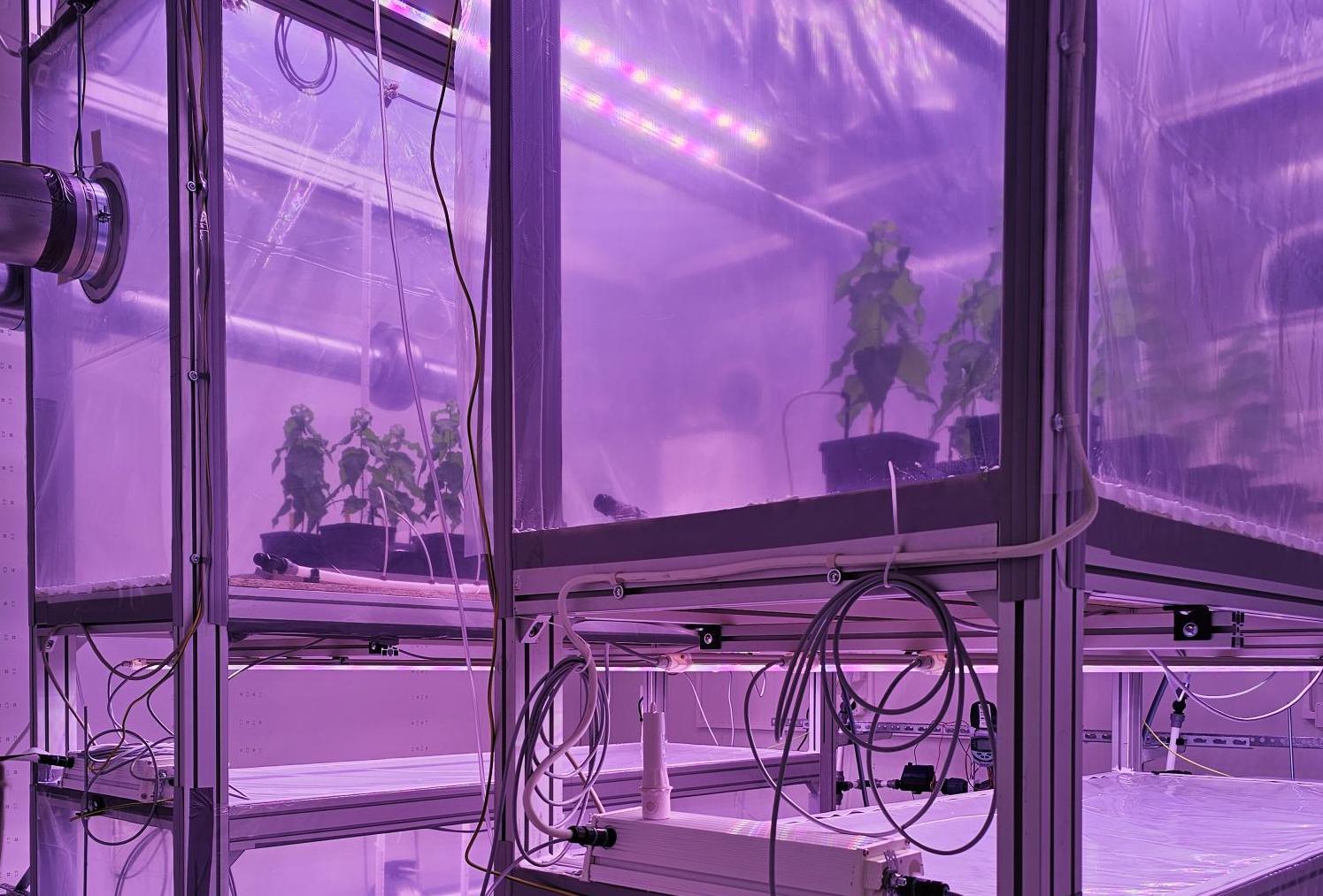
A project at the University of Cambridge in the United Kingdom is investigating the effects of climate change on different plant species. The project, called Future Climate Change, is being implemented by the University of Helsinki, which commissioned Metropolia University of Applied Sciences to carry out tests on the cultivation of aspen.
From March to May 2026, Metropolia’s cultivation facilities have been used to test how aspen grows under four different carbon dioxide concentrations and two different temperatures. Metropolia’s experts have built controlled experimental systems in which conditions can be precisely adjusted and have tested aspen growth under different treatments.
The initial hypothesis of the University of Helsinki’s project group for the aspen cultivation tests was that up to a certain point, high carbon dioxide concentrations accelerate the growth of aspens, but that beyond a certain threshold, this trend reverses.
“Temperature has had a significant effect on aspen growth, but the analyses of the carbon dioxide treatments are still ongoing,” says Metropolia project planner Andrea Patané.
In Metropolia’s unique environmental chambers, the growth of various plant species can be tested under a wide range of conditions. The Urban Farm Lab has modifiable test environments and automated measurement systems.
Professor Yrjö Helariutta from the University of Helsinki explains that the university wanted to collaborate with Metropolia because Metropolia had been identified as having the most suitable facilities in the Helsinki metropolitan area for the controlled cultivation of trees in greenhouse conditions.
“This is a collaboration project between Metropolia, the University of Helsinki and the University of Cambridge. The research is funded mainly from the United Kingdom,” Helariutta says.
Researchers at Urban Farm Lab come from many backgrounds
Urban Farm Lab is one of the collaboration platforms within Metropolia’s Clean and Sustainable Solutions innovation hub, where food technologies and food production in an urban city environment are studied.
According to Andrea Patané, evidence-based information is needed to support political decision-making on how to secure life on Earth in the future. To be able to prepare for the impacts of climate change, we must understand how plants will grow under possible future climate conditions. Rising atmospheric carbon dioxide concentrations and global warming may affect plant growth in unpredictable ways, which in turn will influence the capacity of carbon sinks. This has implications for Finland’s entire carbon neutrality policy.
Patané graduated as an engineer from Metropolia in 2022. In addition to Metropolia’s own graduates, there is strong research expertise at the Urban Farm Lab. Postdoctoral researcher Elli Koskela, who started working at Metropolia at the end of 2025, acts as a consultant in the aspen project. Her varied role includes developing the activities of Urban Farm Lab, writing project applications and consulting on different cultivation projects.
She was particularly interested in Metropolia as a workplace because of the diversity of the job.
“I was impressed by Metropolia’s Urban Farm Lab facilities and cultivation rooms. The cultivation conditions can be controlled extremely well here – these are Finland’s finest do‑it‑yourself environmental chambers,” Koskela says.
Koskela studied horticulture at Häme University of Applied Sciences, completed a master’s degree in crop production at the University of Helsinki and later earned her doctorate at the University of Helsinki’s Viikki campus by studying the environmental responses of strawberries. She has also carried out post-doctoral research on strawberries in both Finland and Spain.
Before joining Metropolia, Koskela worked as a postdoctoral researcher at VTT Technical Research Centre of Finland, studying nicotine alkaloids in tobacco and how they are formed.
“At Metropolia I have also had the opportunity to analyse data from autumn cultivation experiments on strawberries and wasabi. Excellent theses on cultivation-related topics are being done at Metropolia, and it has been a pleasure to follow them,” Koskela says.
Koskela and Patané will visit Aalto University on Wednesday 3 June to speak about Urban Farm Lab’s environmental chambers and vertical farming at a meeting of the international GROWvertical network. On Friday 5 June, the network will visit Metropolia’s Myyrmäki campus to get to know the urban cultivation facilities.
Further information
Andrea Patané
Project Coordinator, Metropolia University of Applied Sciences
Andrea.Patane [at] metropolia.fi (Andrea[dot]Patane[at]metropolia[dot]fi)
Elli Koskela
Researcher, Metropolia University of Applied Sciences
Elli.Koskela [at] metropolia.fi (Elli[dot]Koskela[at]metropolia[dot]fi)
Yrjö Helariutta
Professor, University of Helsinki
yrjo.helariutta [at] helsinki.fi (yrjo[dot]helariutta[at]helsinki[dot]fi)