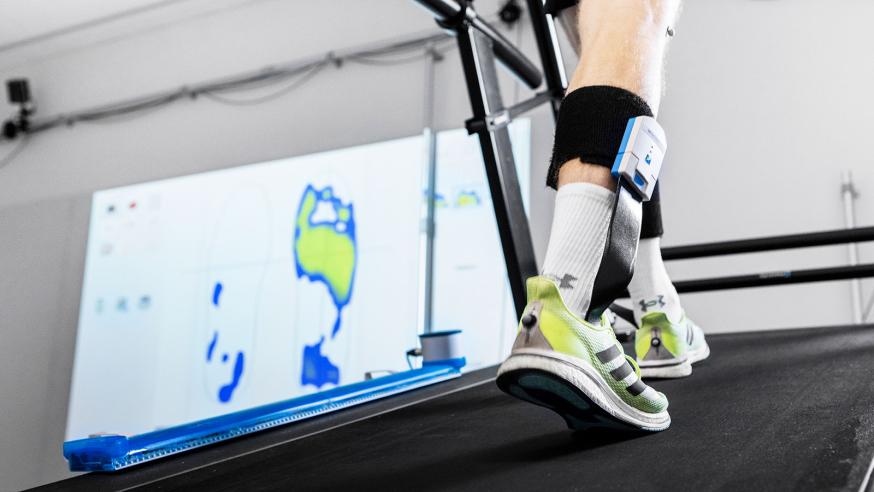
Inside Metropolia Movement Lab
Step inside Metropolia's Movement Lab and explore state-of-the-art facilities for exercise, movement research, and wellbeing.

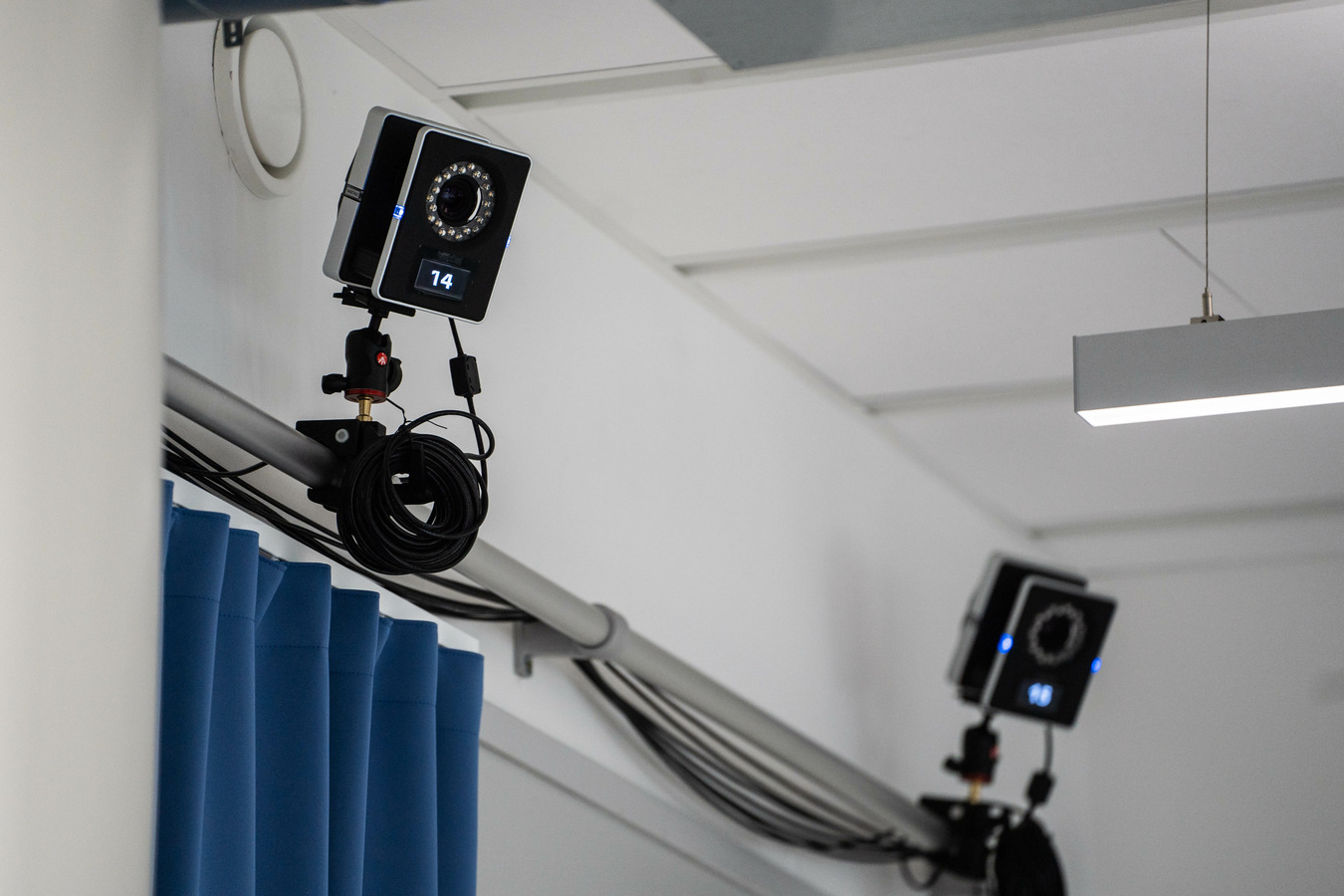 Traditional movement assessment in research has relied on laboratory-based 3D motion analysis—highly accurate but time-consuming, costly (e.g. Vicon systems), and requiring specialized staff and facility access.
Today, pose estimation can be performed with lightweight solutions, such as smartphone video, significantly improving accessibility and expanding use cases (Cronin et al., 2023; Hellsten et al., 2021; Wade et al., 2022).
Although AI models for pose estimation have existed for over a decade (Armitano-Lago et al., 2022), they often demanded specialized hardware or heavy computation.
Recently, lightweight models (e.g. BlazePose) have been adapted for real-time movement analysis (Chen et al., 2022), fall detection (Liu et al., 2022), and temporal gait-event detection during running (Young et al., 2023).
The TEKLI research project evaluates the reliability and reproducibility of computer vision applications for analyzing squats, jumps, walking, and running by simultaneously recording movements with a laboratory-grade motion-analysis system and standard video.
Funding & Data Collection The research is funded by Metropolia University of Applied Sciences and the Academy of Finland, data collection took place at Metropolia movement laboratory. Data analysis is currently in progress.